
Brake Pad Formulations
Roland offers ceramic, low-metallic and semi-metallic brake pad formulations for different vehicle applications, driving conditions and aftermarket requirements. Choose the formulation and specification that fit your product programme.
* All friction formulations are 100% asbestos-free.
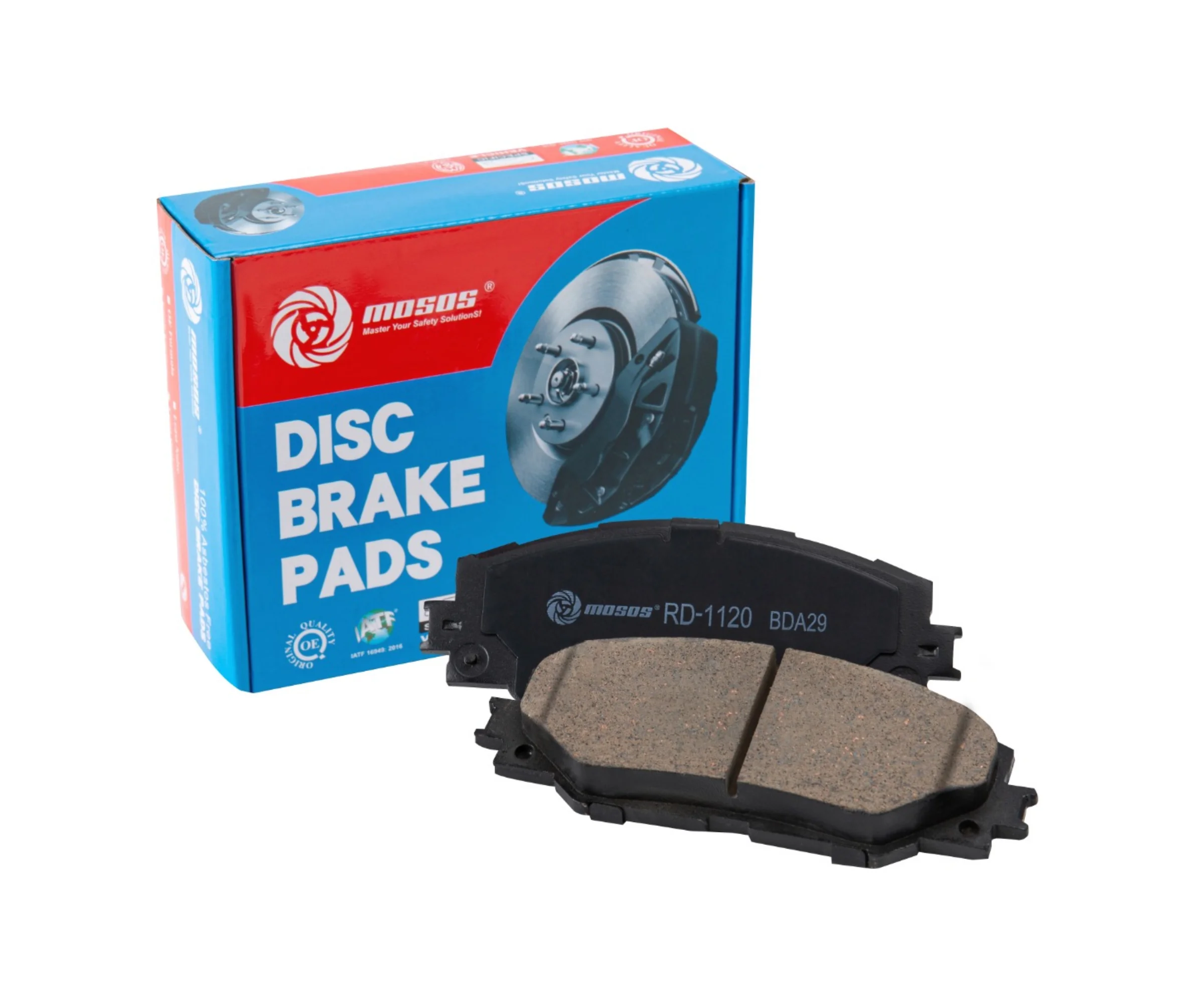
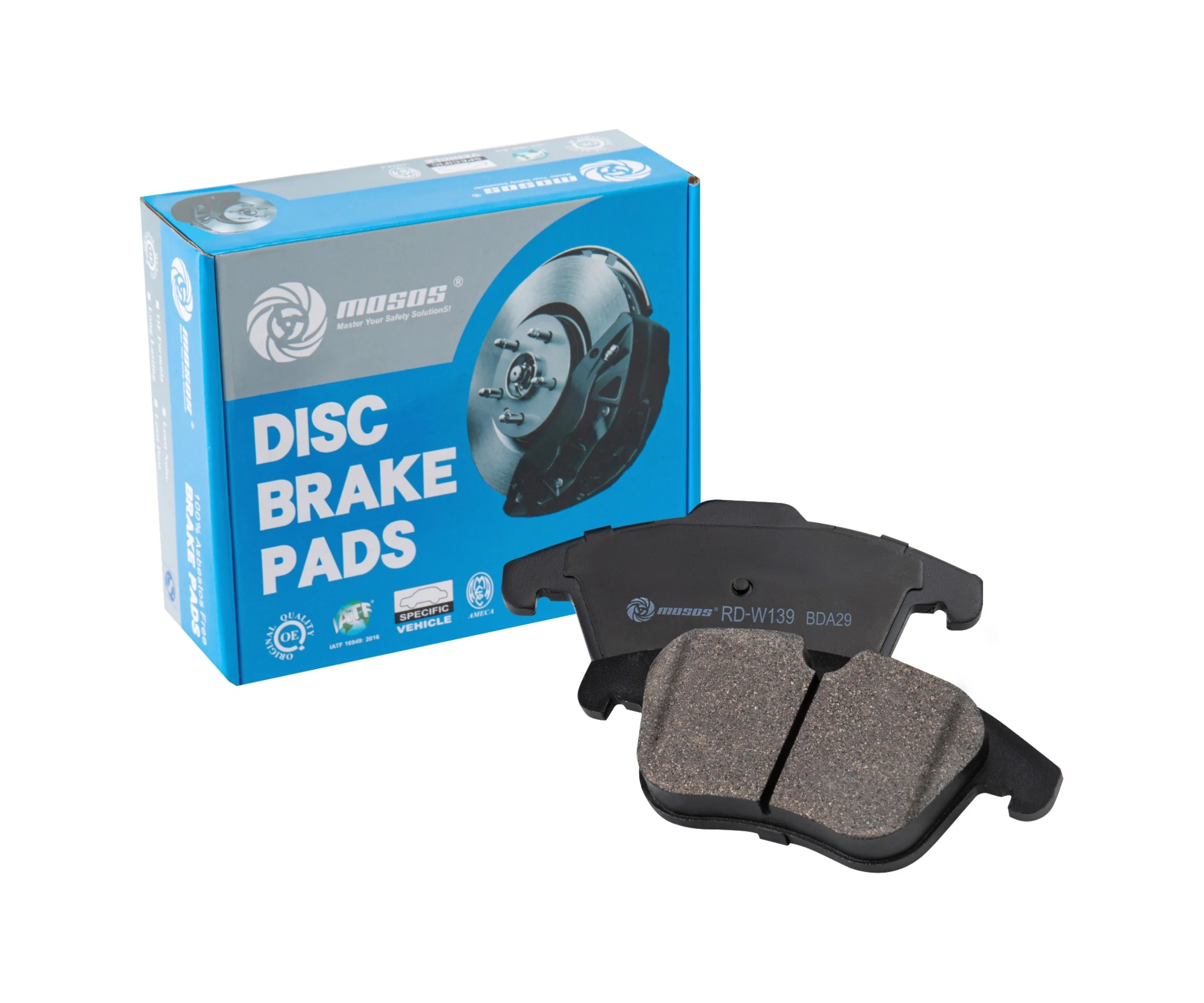
Ceramic Brake Pads
For passenger-car ranges where refinement and wheel cleanliness are key purchasing priorities. Formulation options can be matched to comfort-focused aftermarket positioning.
Low-Metallic Brake Pads
For applications that place greater emphasis on braking response and friction stability during repeated braking. Select the formulation to suit the vehicle’s braking requirements and intended duty.
Semi-Metallic Brake Pads
For frequently used vehicles where wear performance and operating costs are priorities. Options can be matched to passenger-car and light-commercial programmes.
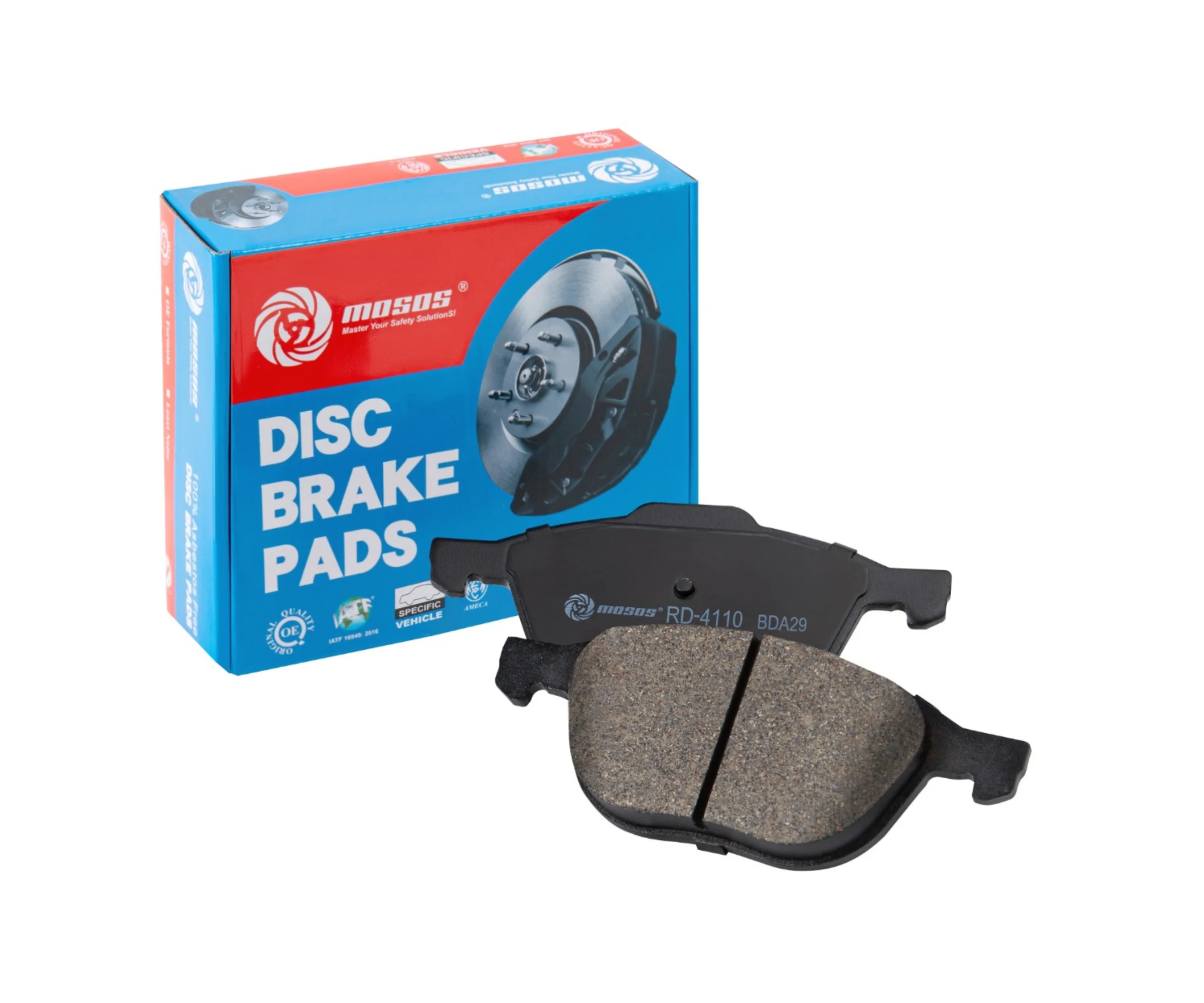
Formulation selection is based on the vehicle application, braking requirements and product specification. No single material category is the best choice for every vehicle.
PERFORMANCE AND PRICE OPTIONS
Each formulation category is available in different performance and price levels. We help match the specification to your target market, budget and product positioning. For OEM and private-label projects, requirements can be refined through sample evaluation and testing.
BRAKE PAD STRUCTURE & TECHNOLOGY
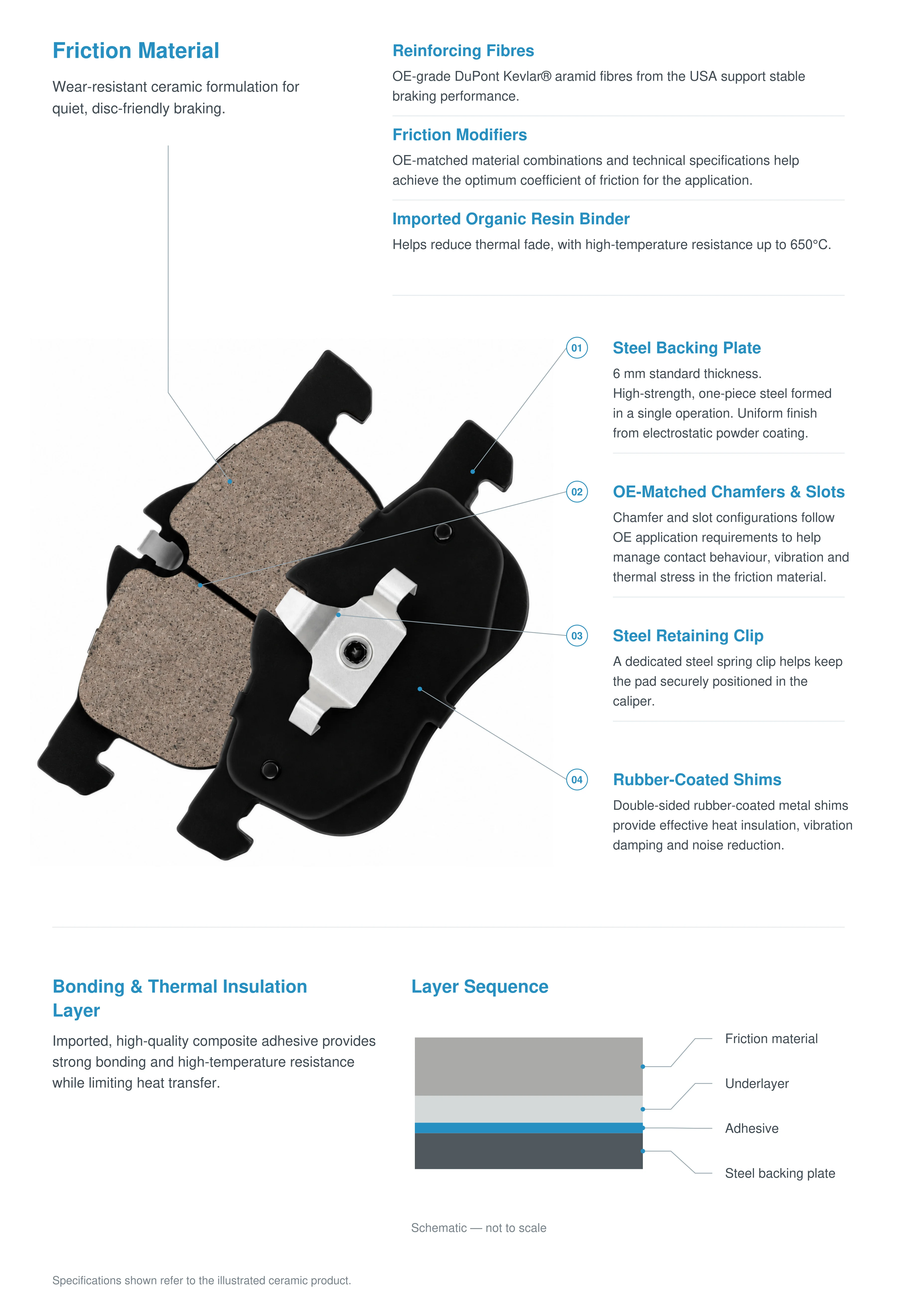
Roland matches the friction formulation, bonding system and pad construction to the intended brake application. The details below show how materials and assembly contribute to braking performance, fitment and noise control.
Material sourcing details
Raw-material selections across the formulation range include German graphite, Dutch mineral fibres, Austrian metal sulphides, Mexican wollastonite, Australian zircon sand and Korean aramid fibres. Ingredient combinations and origins vary by formulation.
LINK Test Reports
Brake pad samples have been evaluated by LINK for braking effectiveness, squeal noise, and friction and wear characteristics.
SAE J2522-based
Braking effectiveness
SAE J2521
Squeal noise
SAE J661
Friction & wear characteristics
Brake pad samples have been evaluated by LINK for braking effectiveness, squeal noise, and friction and wear characteristics.
Manufacturing & Process Control
Controlled material handling, formulation preparation and production parameters help maintain consistency from batch to batch. The ten stages below outline the controls used throughout production and assembly.
1.Incoming Material Inspection
Each batch of friction raw materials, backing plates, shims and clips is inspected and tested against the specified standards.
2.Controlled Material Storage
Key raw materials are stored under controlled temperature and humidity. First-in, first-out (FIFO) handling and barcode management support material identification and batch control.
3.Weighing & Dry Mixing
Raw materials are weighed and dry-mixed to the specified formulation. Ingredient quantities, addition sequence and mixing time are controlled to maintain blend consistency.
4.In-House Backing Plate Preparation
Steel backing plates are produced in-house, then shot-blasted, cleaned and roller-coated with adhesive to prepare the bonding surface.
5.Controlled Hot Pressing
Each mould cavity has independent pressure and temperature control. The venting sequence and pressing time follow the specified process parameters.
6.Batch Heat Treatment
Pads are arranged on trays for batch heat treatment. Product placement, heating time and cooling time are controlled according to the process specification.
7.Grinding, Chamfering & Slotting
Integrated machining equipment performs grinding, chamfering and slotting to the requirements of each part number and brake application.
8.Backing Plate Powder Coating
The steel backing plate is powder-coated for corrosion protection, with coating colour and thickness matched to customer requirements.
9.Shim Bonding & Inspection
Where specified, the steel backing plate receives plasma treatment before the shims are bonded using a cold- or hot-bonding process. The assembly then undergoes a tap test.
10.Final Assembly, Marking & Packaging
Retaining clips or shims are riveted in place where specified. Inkjet coding, pad printing and packaging are completed to the order requirements.
Surface scorching is specified separately where required to condition the friction surface and support initial braking performance.
Find the Right Formulation for Your Market
Share your OE part numbers or vehicle applications, target market, order quantities and performance requirements. Our team will help select a suitable formulation, confirm the specification and prepare a quotation.